Best Appraiser for Agricultural Businesses: What to Compare
A practical way to compare appraisers for farms and agricultural businesses by checking land, buildings, use rights, permits, income evidence and the report purpose.
When this valuation matters
If you are choosing an appraiser for a farm or agricultural business, compare the provider with the land, buildings and operating evidence in your file. Farm owners, buyers, lenders and advisers can compare providers against the records and decisions their file actually contains.
Table of contents
- TL;DR
- What the choice should cover
- Why agricultural facts matter
- Five checks before choosing
- Prepare and compare
- Scenarios and limits
- Common mistakes
- FAQ
TL;DR
Choose an appraiser who can discuss farmland, buildings, rural rights and business records in the same intake while keeping each value interest clear. Ask how the provider handles pacht, mixed use, environmental limits and missing accounts before comparing fees.
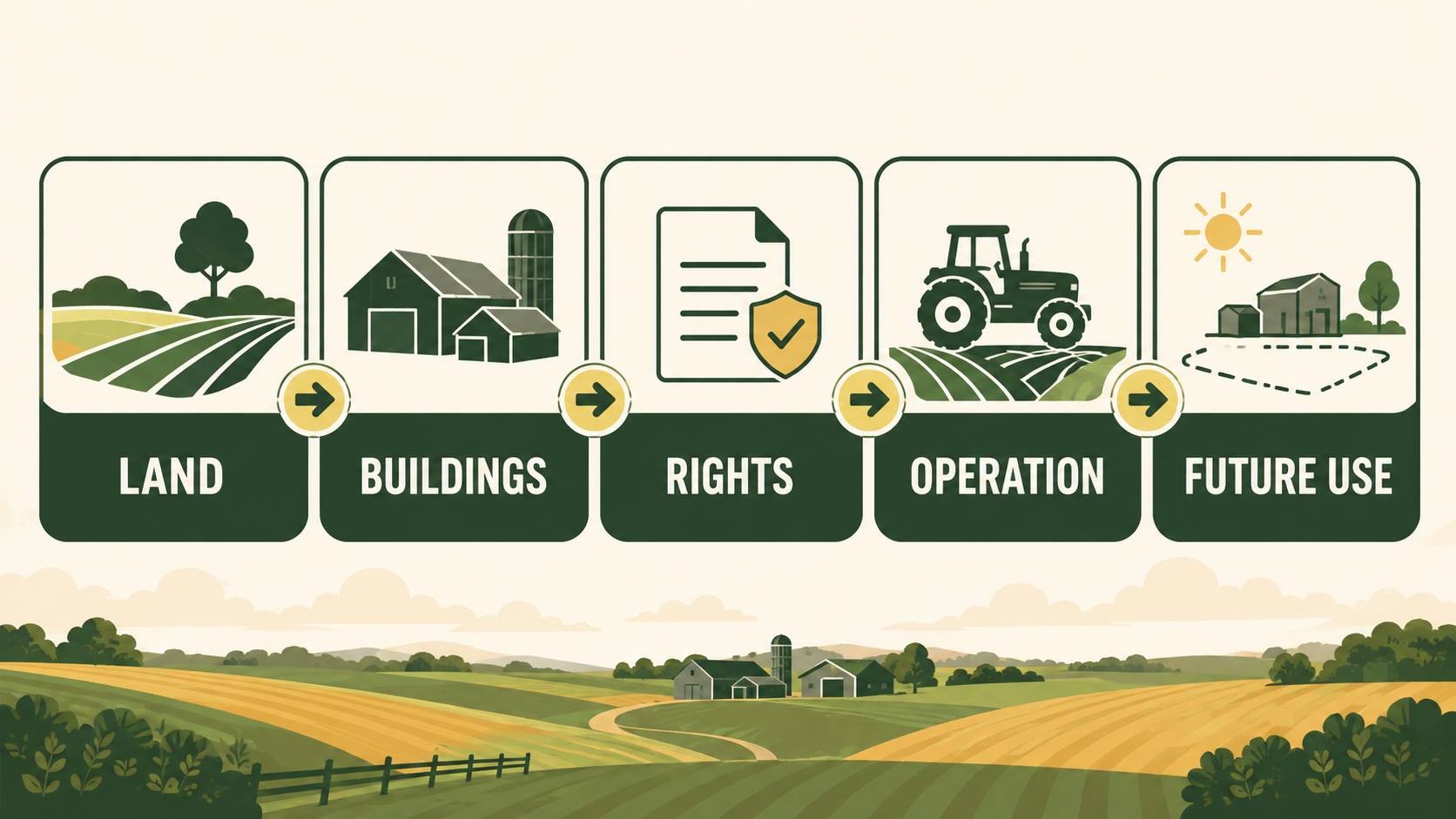
- State the parcels, buildings, property interest, value date and report recipient.
- Separate agricultural property from livestock, crops, equipment and the wider business.
- Gather parcel records, pacht agreements, plans, permits, accounts and condition material.
- Ask how use rights, environmental information and future plans will appear in the report.
- Compare inspection, land research, method, assumptions, delivery date and fee together.
That gives you a useful starting point. The next question is how the assignment works for the person who will rely on it.
Ask which rural transactions, land references, building evidence and market assumptions will support the opinion. If you are assessing a farm near Eindhoven, consider a property valuation in Knegsel as residential evidence, then analyse the land, rights, buildings and business operations separately.
What the choice should cover
A property valuation is an opinion of value for a stated interest, purpose and date. For an agricultural business, the work may include a site inspection, parcel and title research, review of pacht or lease terms, market research and a reasoned valuation method. Accounts can explain the operation, yet the assignment still needs a clear boundary around the property.
The wider agricultural real-estate valuation context helps separate land and buildings from the operating business. Ask the candidate which information is necessary, which is helpful and which question needs another adviser.
The recipient matters early. A lender, buyer, owner, court, tax adviser or successor may need a different date, interest or report format. The word farm does not tell the appraiser whether the assignment concerns freehold land, pacht, a dwelling, a business site or a planned change.
The next question is why this detail changes the valuation.
Why agricultural facts matter
Rural property value can depend on the relationship between parcels, buildings, access, water, use and local market evidence. A modern barn may have a different use and market than an older shed. A house on a farm may follow residential evidence while its land and outbuildings follow rural evidence. A business can also contain machinery, stock and contracts that should not be silently counted as real estate.
NRVT’s land and agricultural guidance treats rural and agricultural property as its own field with its own evidence, methods and uncertainty. That gives a useful question for provider selection: does the candidate routinely handle the type of rural object in the brief, and can the report explain which rights and records support the conclusion?
Land use also needs care. RVO explains that use of an agricultural parcel can depend on a use title from the owner. A person who uses land is not automatically its owner. Put ownership, pacht, access, water and other rights in separate lines so the candidate can identify what is being valued.
With the purpose settled, you can work through the checks in an order that mirrors the decision.
Five checks before choosing
1. Land and parcels
List cadastral references, size, shape, access, roads, water, nature elements, parcel boundaries and any land used by another party. Mark which parcels belong to the assignment and which are connected operationally but excluded. Maps and recent deeds help prevent a broad farm label from hiding the real boundary.
2. Buildings and installations
Describe the house, barns, stables, greenhouses, silos, yards, wells, drainage, energy systems and other fixed items. Add floor areas, construction years, renovations, condition and current use. A building’s physical fit for agriculture differs from its possible use for storage, retail, housing or care.
3. Use rights and permissions
Gather ownership records, pacht agreements, lease terms, easements, access rights, water arrangements, environmental records and known planning decisions. Write down what is current, what is pending and what is hoped for. A future use belongs in a stated scenario, not in the current description by implication.
4. Operation and records
Accounts, crop plans, livestock numbers, rent, subsidies, contracts and production records can explain the business context. They do not all become property evidence. Ask how the appraiser will treat equipment, stock, labour, exceptional seasons and a business that may stop or change hands.
5. Evidence and report recipient
Good preparation keeps a missing document from becoming a late surprise.
Prepare and compare
- Write the decision. Put the purpose, recipient, value date and property interest at the top.
- Map the land. List every parcel, access path, water feature and connected parcel.
- Describe the buildings. Add use, floor area, condition, installations and fixed equipment.
- Gather rights. Include title, pacht, lease, easement, access and planning records.
- Build the evidence file. A farm file needs property valuation documents for parcels, buildings, rights, leases and known defects.
- Ask about future scenarios. Put a possible conversion, sale of land or business cessation in a separate question with its own assumptions.
- Compare the full scope. After the land and building scope is written down, compare valuation quotes by the evidence requested and work promised.
Scenarios and limits
A farm with pacht
The pacht agreement can affect the interest, income and evidence. Give the appraiser the full agreement, dates, obligations, renewal terms and any correspondence. A rent figure without the rights and conditions gives an incomplete picture.
A farm with a second use
A barn may contain storage, a workshop, recreation or another activity. Describe the actual use, the stated permitted use and the records supporting each. When you compare providers, ask whether each candidate has handled mixed rural property.
A possible erftransformatie
RVO describes farm-yard change as a possible method for some former or changing farms, subject to local and regional policy. A plan for homes or another use needs its own planning and financial assumptions. The current agricultural value and the possible future case should be reported as separate questions.
A business transfer
The buyer may care about the farm operation, while the lender may need a property value. List land, buildings, equipment, stock, contracts and goodwill separately. Ask the candidate which parts fall within the requested report.
Keep these points in view when you ask for the report.
Before you book, check the mistakes that can create extra work or leave you with the wrong report.
Common mistakes
- Treating the word farm as a complete property description.
- Combining land, buildings, equipment and business value in one unexplained amount.
- Omitting pacht, access, water, easements or shared roads.
- Treating a planning idea as current permitted use.
- Sending accounts without explaining unusual seasons, grants or business changes.
- Comparing fees before the parcel and building boundary is agreed.
The remedy is a parcel map, a building list, a rights schedule and a clear value question.
Before the appointment, settle the practical questions that affect the report.
FAQ
Can any property appraiser value a farm?
Ask about rural registration, comparable assignments, the property boundary and the proposed method. Residential experience alone does not answer whether a person fits a farm with land, buildings and rural rights.
Does farm income equal property value?
No. Income describes part of the operation. The property opinion also depends on land, buildings, rights, condition, market evidence, assumptions and date.
Which land records matter?
Start with cadastral information, title, pacht, lease, access, water, easements, parcel use and known restrictions. RVO or the municipality may hold separate records for a particular question.
Can the appraisal include future housing on the farmyard?
It can address a future scenario when the assignment states the assumptions and the responsible authority’s role remains clear. A plan does not prove permission or feasibility.
Can a lender use the same report as a buyer?
Not automatically. Valuation report requirements identify the recipient’s question before a rural business file is assessed. Confirm the lender’s conditions before the assignment is accepted.
Does a rural home belong in the same report as the farm?
It depends on the property interest and purpose. List the home, agricultural buildings, land and business parts separately so the candidate can explain the evidence and method.
Write down the parcels, buildings, use, pacht or other rights, permits, value purpose and report recipient before comparing appraisers. Add maps, lease records, accounts and condition notes when they affect the question. Contact us if the agricultural-business facts need to become a focused brief. Do not send passports, contracts, bank details or other personal documents through the public form.
Ask about agricultural property valuation →