Agricultural Property Valuation: What a Rural Appraisal File Should Separate
Learn how to prepare a valuation of farms, farmland and rural property by separating land, buildings, use, rights, income and uncertainty.
When this valuation matters
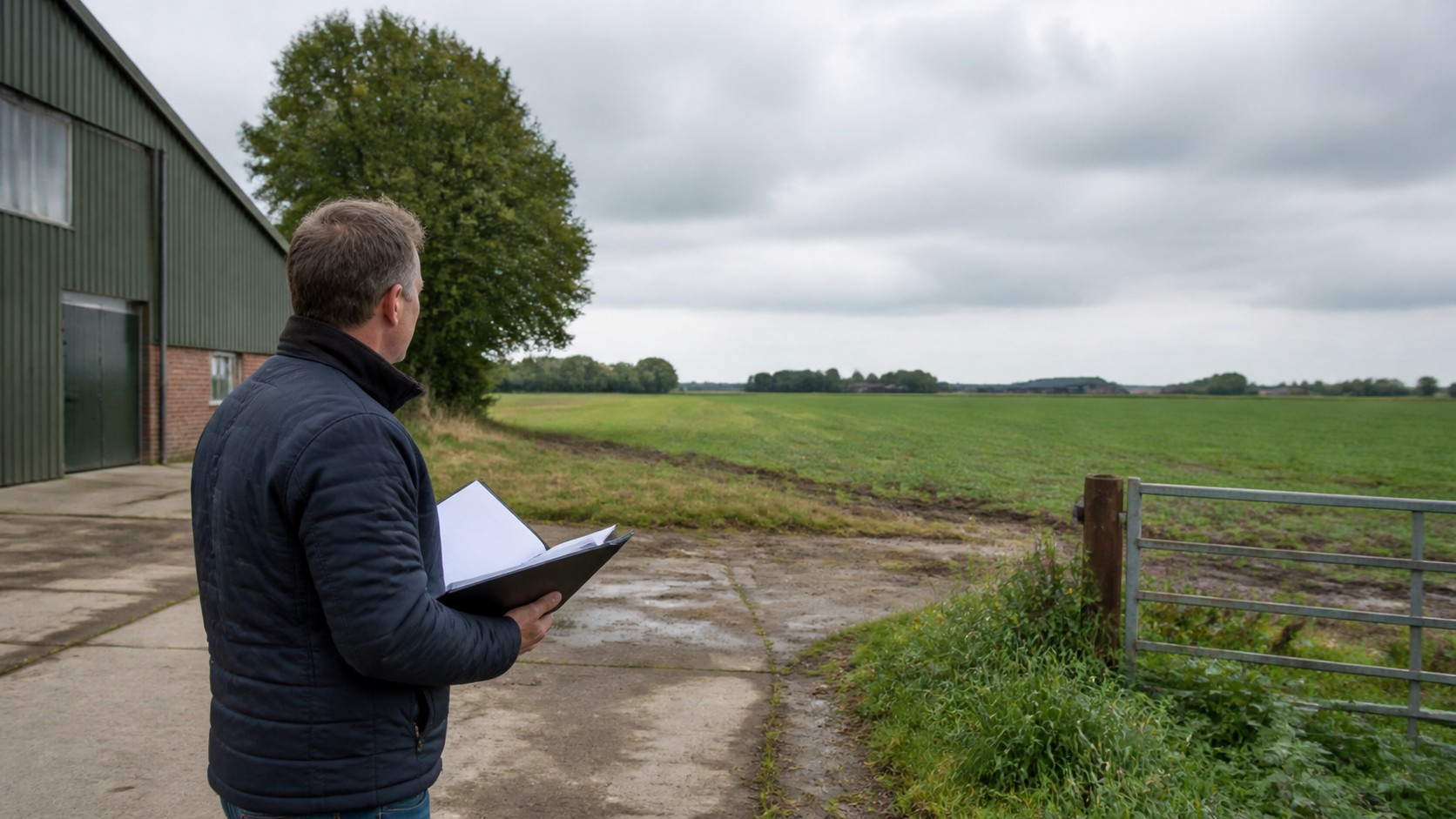
If you are valuing a farm, keep land, buildings, the rural home and operating business visible in one brief. Farm owners, buyers, lenders and advisers need a report that keeps those interests visible, especially when leases, environmental limits or mixed use affect the value question.
Table of contents
- TL;DR
- What a rural and agricultural appraiser does
- Why the object and the operation must be separated
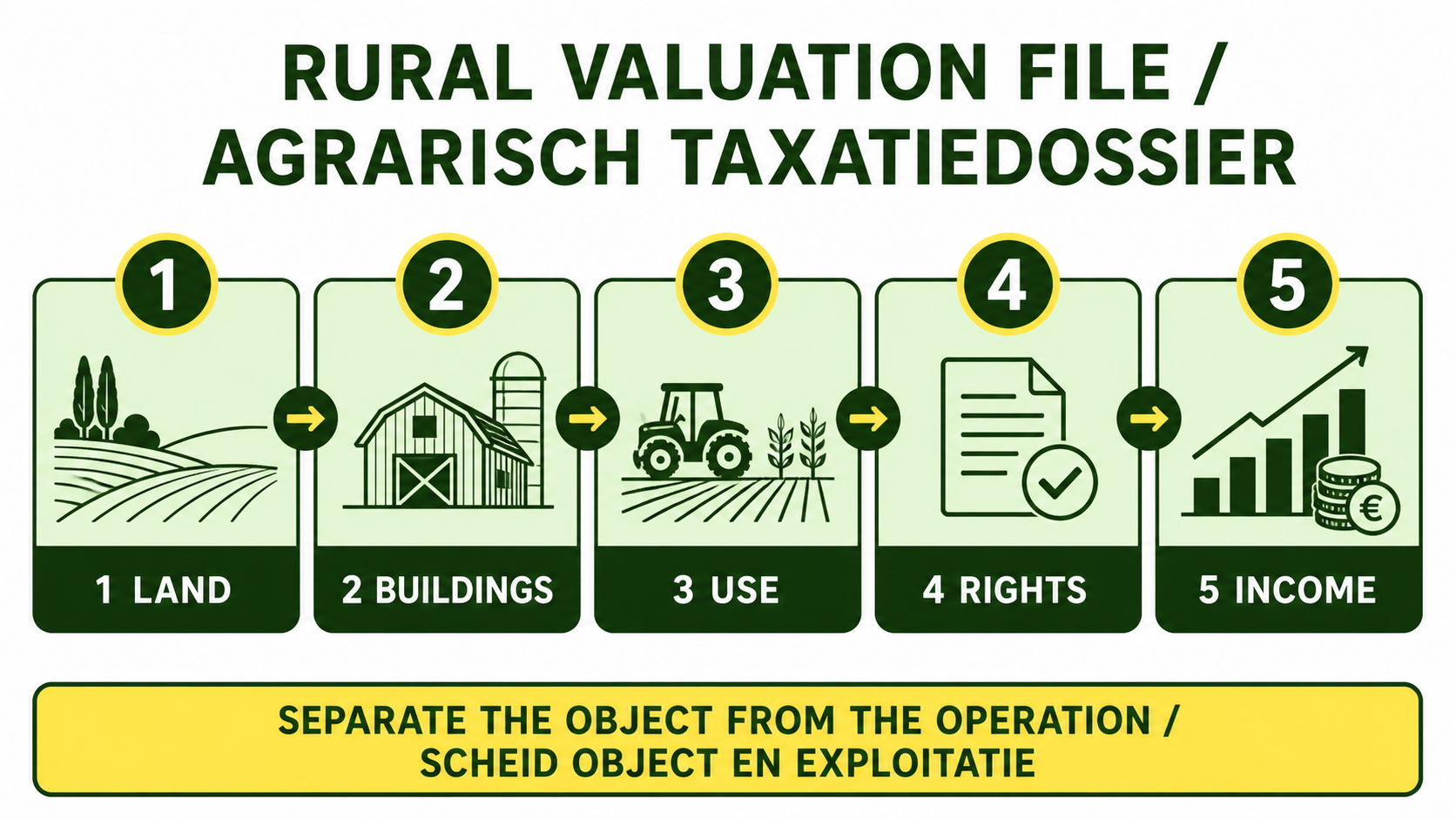
- The five-part rural valuation file
- How to prepare the evidence
- Common mistakes and edge cases
- FAQ
TL;DR
For agricultural property, describe the land, buildings, rights and operation before anyone discusses a figure. The appraiser can then show what belongs to the property value, what belongs to the business and where the evidence remains uncertain.
Keep the boundary clear: separation. A field, barn, lease or pacht right and the operating return of a farming operation influence one another, but they are not automatically the same value interest. A clear report should show which facts are observed, which are supplied, which are assumed and which remain uncertain.
That gives you a useful starting point. The next question is how the assignment works for the person who will rely on it.
If you are assessing an agricultural holding near Eindhoven, compare residential or village market evidence from Asten with the land, buildings and business operations before forming the agricultural conclusion.
What a rural and agricultural appraiser does
An appraiser forms an opinion of value for a stated purpose, property interest and value date. A rural assignment can require research into land parcels, buildings, access, use, environmental or planning context, lease or pacht, rights, comparable transactions and income evidence.
NRVT lists rural and agricultural property as a specialisation separate from residential and commercial property. A rural home with major land, an agricultural building with another use or a property with recreation or estate features may cross categories. Define the scope rather than assuming the label “farm” answers it.
Residential valuation fundamentals still apply to the dwelling, while land, use rights and agricultural evidence change the assignment. If the asset includes business use, commercial property valuation makes lease, income and operating evidence part of the scope.
Now the practical consequence becomes clear: the evidence has to answer the question behind the assignment.
Why the object and the operation must be separated
A farm can earn income from crops, livestock, storage, tourism or another activity. That income can be evidence about the operation, but it does not automatically equal the value of the land and buildings. Conversely, a building may have a use or right that affects the property even when the current operation is weak.
NRVT’s published disciplinary case is a useful warning: where needed information was missing or incorrectly recorded, third parties could not trace the calculation and build-up of the estimated market value. A report needs that traceability because it lets another reader follow the evidence behind the figure.
An owner may reasonably experience the farm as one economic unit. The valuation can respect that reality while showing which evidence belongs to the operation, the land and the buildings, and the links between them. The purpose and recipient then determine what the report needs to conclude.
Once those points are clear, gather the records that let the appraiser test them.
The five-part rural valuation file
1. Land
Record parcel identity, area, boundaries, access, soil or terrain information where relevant, use and comparable land evidence. State whether the question concerns all land or a defined parcel.
2. Buildings
List homes, barns, sheds, greenhouses, silos, yards and other structures. Add age, condition, area, permits, services and any adaptation or demolition question.
3. Use
Describe actual and permitted use, crop or livestock context where relevant, vacant or unused buildings, recreation, nature or estate use and any planned change.
4. Rights
Include ownership, lease or pacht, easements, access, tenancy, water or mineral rights where relevant, planning designations and restrictions. Let a lawyer confirm legal interpretation.
5. Income
Separate property income from business income. Provide leases, storage contracts, rent, production information or tourism revenue only when relevant to the assignment, and label actual figures versus projections.
How to prepare the evidence
- Name the purpose and recipient. Sale, finance, division, reporting and planning can require different outputs.
- Map the object. Prepare parcel and building information with a simple identity list.
- Gather rights. Add title, pacht or lease documents, access arrangements and restrictions.
- Describe use. Mark current, permitted and planned use separately.
- Separate income. Distinguish real-estate rent from operating turnover and assumptions.
- Review the report. Check methods, references, calculations, assumptions, uncertainty and value date.
The file should identify the land, buildings, rights and available records; property valuation documents help expose missing general facts before rural evidence is added. Ask the appraiser which rural-specific items are needed and what cannot be verified.
Keep these points in view when you ask for the report.
Before you book, check the mistakes that can create extra work or leave you with the wrong report.
Common mistakes and edge cases
- Valuing all hectares as if they have the same use or market.
- Calling a farm’s turnover the value of the property.
- Ignoring pacht, access, easements or permitted-use restrictions.
- Treating a rural home as an ordinary residential comparable without testing the land and buildings.
- Leaving missing maps, rights or building information implicit.
- Using current income to answer a historical value-date question without adjustment.
Mixed rural and commercial use, nature designation, recreation, environmental restrictions, a tenant operation or a planned division may change the scope. The correct response is to make the assumption visible and ask the responsible professional to confirm the boundary.
Use these questions to test whether the proposed work fits your situation.
FAQ
Is a farm valued by the land area alone?
No. Land is one layer. Buildings, use, rights, market evidence and relevant income can also matter, depending on the assignment.
Does the valuation include the farming business?
Not automatically. Ask which property interest is being valued and whether operating information is used as context, evidence or a separate business question.
Do I need a rural specialist?
The right scope depends on the object and purpose. NRVT lists rural and agricultural property as a specialisation. Ask the intended recipient and appraiser whether the relevant experience and scope are covered.
Why are rights so important?
Pacht, access, easements, planning and use restrictions can change what the property can do and what evidence is comparable. Their legal meaning should be confirmed with the appropriate adviser.
What if information is missing?
Mark it as missing and ask how it affects the method and uncertainty. Do not fill a gap with an unlabelled assumption.
For a rural property, collect land boundaries, buildings, use, lease or pacht rights, permits and relevant operating information in separate sections. That structure helps the appraiser explain which evidence supports the real estate and which belongs to the business. Contact us if you want to prepare the right questions before commissioning a report.
Ask about agricultural property valuation →