How to Compare Property Valuation Quotes
Compare Dutch property valuation quotes by purpose, scope, recipient acceptance, evidence, timing and total cost with an accessible decision framework.

Who should use this comparison
If you are comparing valuation quotes, put the brief, inspection, report, validation, timing and total cost beside each other. Buyers, homeowners, lenders and advisers can put the brief, inspection, report, validation, timing and total cost beside each other before choosing.
It does not name the best provider and it does not turn a small set of quotes into a market average. The useful comparison is the job behind each amount: purpose, scope, recipient acceptance, evidence, timing and total cost.
TL;DR: Compare the assignment first
Send every provider the same brief and compare the work behind the amount. Ask who receives the report, what is inspected, which method and validation apply, when delivery happens and what could add to the total.
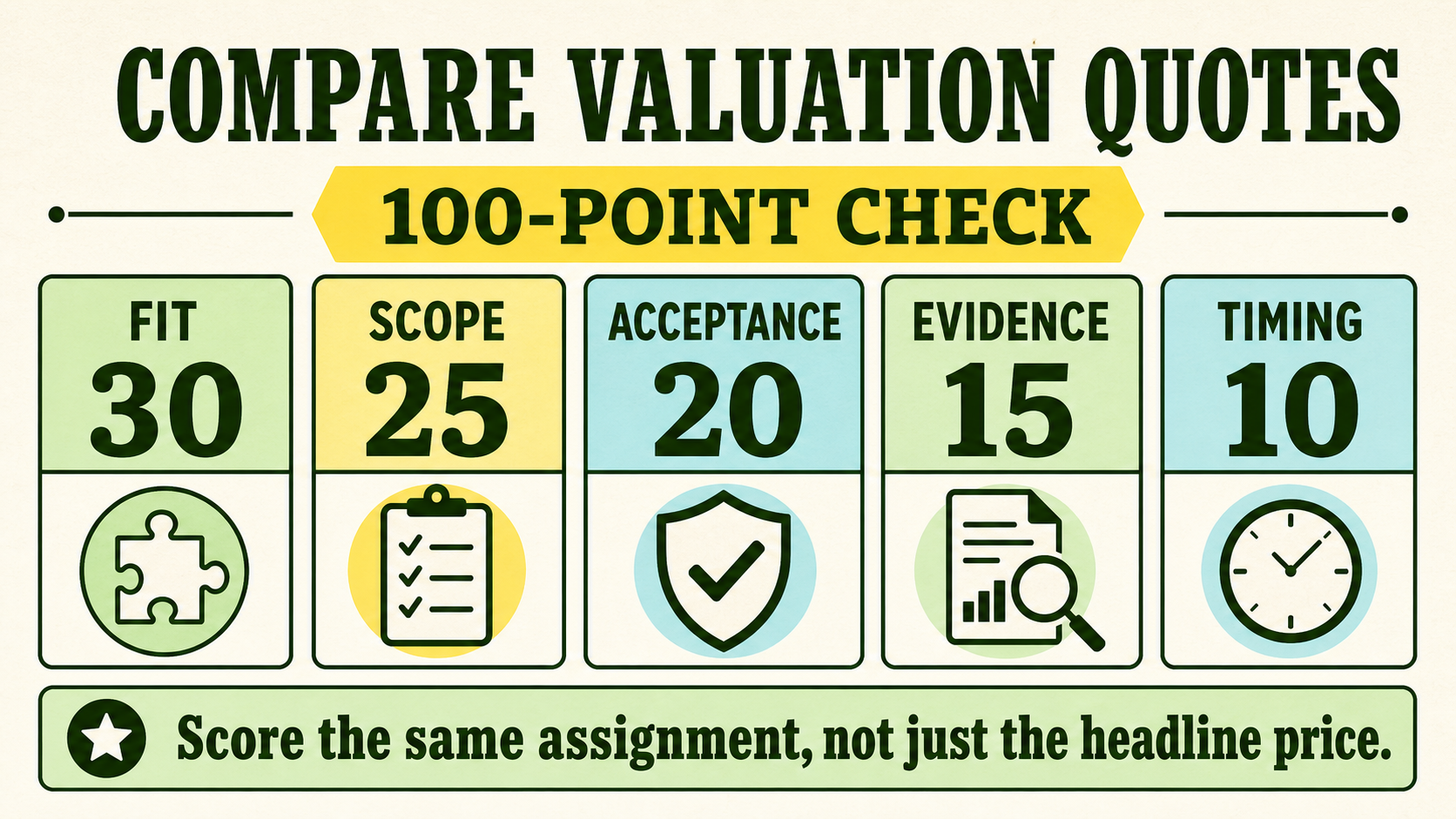
Then compare the quotes in five blocks:
- fit with the purpose: 30 points;
- scope of work: 25 points;
- acceptance by the recipient: 20 points;
- evidence and professional details: 15 points;
- timing and handover: 10 points.
The total is an original 100-point checklist, not a provider score or industry standard. A lower number can represent a narrower assignment. A quote is comparable only when its purpose, work and recipient are comparable.
Keep that purpose in view as the details come in; each one matters because it changes what the appraiser needs to test.
While comparing valuation quotes, match each quoted scope to residential property evidence from Strijp-S and note which property facts the fee includes.
At-a-glance comparison
This definition list presents the two quote patterns without a desktop-only table.
- Purpose
- A complete assignment quote names the decision and recipient. A headline-only quote leaves the decision open.
- Scope
- A complete quote describes inspection, documents, research, report, validation and corrections. A headline-only quote may show only a base service.
- Recipient
- A complete quote checks the lender, adviser or other recipient's accepted method and format. A headline-only quote makes acceptance your unanswered question.
- Cost
- A complete quote explains VAT, validation, travel, extra research and change conditions. A headline-only quote can be cheaper on paper because lines are missing.
- Timing
- A complete quote states the inspection, report, validation and delivery sequence. A headline-only quote may give only an optimistic finish date.
Option A: a complete assignment quote
What it is and how it works
A complete quote translates your brief into work. It should name the property and purpose, the person who will inspect and sign, the intended recipient, the method, the report format and the expected sequence. It should also state which documents or property facts could change the job.
The current NRVT page for model valuation reports lists the residential model version from April 2026. That is a useful prompt to ask whether the proposed report uses the current form for the relevant recipient. It helps you check the proposed form; delivery and quote quality need separate answers.
Strengths
- You can compare like with like because the work is stated.
- The lender or other recipient’s acceptance question appears before payment.
- Missing documents and unusual features are visible early.
- Extra work, VAT and third-party validation can be discussed before the amount changes.
- The delivery sequence can be placed next to the purchase or financing deadline.
Limitations and risks
- A detailed quote can still be wrong for the recipient if the acceptance rule was not checked.
- A written scope is not proof that every fact about the property is known.
- A fixed amount may still exclude work that was not disclosed or agreed.
- A long quote can create false confidence if the person, method or report date is not clear.
An invoice can contain several types of work, so property valuation costs should be separated from the registration question. NRVT-registered appraisers identify the professional status that a recipient may require.
Option B: a headline-only quote
What it is and how it works
A headline-only quote gives a single amount or short product label before the assignment has been made specific. It can be a useful starting conversation. It needs more detail before you compare it with a full report quote.
Ask what the amount includes, which report recipient it assumes and what happens when a property fact or document changes the scope. If the provider cannot answer, mark the quote as open rather than scoring it as cheap.
When it can be useful
- You are collecting an initial range before you know the recipient’s exact rule.
- The provider asks for property facts before confirming the final scope.
- You need to identify which questions must be answered before requesting a formal quote.
Limitations and risks
- The amount may omit validation, travel, document research or correction time.
- The stated delivery date may cover only the report writer’s part.
- VAT or third-party costs may appear later.
- A product label such as online, hybrid or rush does not prove recipient acceptance.
Treat this quote as an invitation to make the point clear, not as the winner of a price contest. When timing is the main constraint, choosing a property valuer on a tight deadline separates inspection, validation and delivery dates.
The 100-point decision framework
Score each quote only after giving all providers the same brief. The maximum is 100:
Fit with purpose: 30 points
Does the quote answer the actual question? A mortgage purchase, refinancing, inheritance, sale preparation and dispute can require different instructions. Record the property, value date and recipient.
Scope of work: 25 points
Look for inspection, document review, comparable-property research, report preparation, validation, corrections and questions after delivery. Note whether a second visit, unusual construction or missing record needs a separate agreement.
Recipient acceptance: 20 points
Ask the lender or other recipient what it accepts before choosing. Confirm physical or hybrid method, validation, report age, format and delivery channel. The stated purpose and recipient determine valuation report requirements.
Evidence and professional details: 15 points
Check who will inspect and sign, which professional register or chamber is relevant, what assumptions are made and how the amount is broken down. Registration can be important evidence, but it does not by itself prove that the quote fits your purpose.
Timing and handover: 10 points
Record the inspection slot, report date, validation, correction window, final delivery and quote expiry. Place those dates beside the financing condition or other deadline. A fast estimate without a stated scope is not a reliable timing advantage.
Add the five blocks and write down the unanswered questions. Do not give zero simply because a quote is silent; silence is an open question. The scoring model makes uncertainty visible, but it does not remove it.
These are the details worth checking before you compare providers or send the file.
The visual checklist behind the score
The image represents the five comparison blocks with separate blank cards and the evidence tools around them. The objects are a planning aid; they do not show a market ranking or actual provider prices.
Compare total cost without inventing a market average
Ask whether the amount includes VAT, travel, administration, validation, extra research, a second inspection, corrections and cancellation. The Tax Administration states that 21% is the general VAT rate where no special rate or exemption applies. The invoice and circumstances determine how a particular line is treated.
The Tax Administration also explains that valuation costs incurred to obtain a loan for an owner-occupied home can be deductible financing costs when the statutory conditions apply. A deduction is not a discount at checkout, and it does not prove that a quote is fair. Confirm the tax treatment of your own invoice with the responsible source or adviser.
Request this five-line cost explanation:
- valuation work;
- third-party validation, when required;
- VAT and pass-through costs;
- circumstances that can change the amount;
- payment and cancellation terms.
That breakdown is more useful than searching for one “normal” price. A quote comparison cannot estimate a market average from two or three providers.
Use-case scenarios
Scenario A: Mortgage purchase
The lender requires a report in a particular format and asks for delivery before a financing condition expires. A complete quote that confirms method, validation, report age and upload method is more useful than a lower headline amount. Put the written provider sequence next to the lender’s date.
Scenario B: Refinancing
The homeowner has an older report prepared for another purpose. The new lender may want a different value date, method or recipient method. Ask before reusing the report, then compare quotes for the new instruction rather than treating the old fee as a benchmark.
Scenario C: A property with unusual facts
An extension, leasehold clause, rental use, split ownership or missing permit can change the work. Tell every provider the same facts. A quote that names the extra question is more comparable than one that ignores it, even when the second amount is lower.
Alternatives, hybrids and neither case
An initial estimate followed by a formal quote
An estimate can be useful at the start, as long as it is labelled provisional and converted into a written scope before acceptance. Ask what information is needed to turn it into a final quote.
A hybrid or remote method
A hybrid product may be accepted in some lender processes and not in others. Ask the recipient first, then check which inspection and validation steps the provider includes. Online and physical valuation separates the product label from the evidence and acceptance question.
Neither quote answers the real question
If the request is about building condition, sales advice, inheritance division or a dispute, a valuation report may not be the only or right service. Real-estate agent versus appraiser keeps the role distinction visible before fees are compared.
Before the appointment, settle the practical questions that affect the report.
FAQ about valuation quotes
Should I choose the cheapest quote?
Compare purpose, scope and recipient acceptance first. A lower amount can exclude validation, a second visit, document research or a format required by the recipient.
How many quotes should I request?
A single number cannot tell you whether the quotes cover the same work. Request enough quotes to compare the same scope and work area, then stop when the remaining questions are answered. Two comparable quotes are more useful than several incomplete amounts.
Is a fixed price always better?
No. A fixed price can be useful when the scope and change conditions are clear. It can also hide exclusions, so ask what happens when documents, property facts or recipient requirements change.
Does a registered appraiser make the quote acceptable?
Registration can be relevant evidence, but acceptance also depends on purpose, method, recipient and current requirements. Check the recipient’s rule and the person who will inspect and sign.
Are valuation costs tax deductible?
The Tax Administration says some valuation costs incurred to obtain a loan for an owner-occupied home can be deductible when the conditions apply. The current treatment still depends on the invoice and purpose. Confirm the current treatment for your circumstances.
Should VAT be included in the comparison?
Yes. Record whether every amount includes VAT and which lines are treated separately. The general VAT rate is 21% where no special rate or exemption applies, but the provider’s invoice determines the particular calculation.
What if the quote does not name the report recipient?
Treat that as an open question and ask before accepting. The wrong recipient or format can make a professionally prepared report unusable for the intended decision.
What if the provider will not itemise the amount?
Ask for a written explanation of included work, third-party costs, VAT, changes, payment and cancellation. If the answer remains unclear, you cannot make a reliable scope comparison.
Make the final choice
Write one page with fit, scope, recipient acceptance, evidence, timing, total amount and open questions. Send the chosen brief and the recipient’s conditions to the person carrying out the work. Save the other quotes so you can see why a broader or clearer scope was selected.
Comparing property valuers covers broader selection questions. When the buyer’s position changes the briefing, choosing a property valuer for a first or next home keeps the purpose specific. Beste Taxateur provides general information and does not select or endorse an individual provider.
A provider screen should test appraiser independence and conflicts of interest, interpret appraiser reviews and ratings and avoid common selection mistakes. When the report is for a purchase, an appraiser for buying a home keeps the buyer’s purpose and report recipient visible.
Put the options beside each other first; the reasons behind the difference come next.
Keep the comparison current
Review the recipient’s method, report-age rule, model report and provider scope before a new assignment. Prices, VAT treatment, validation arrangements and lender requirements can change. The score is a snapshot of your decision, not a permanent rating.
A lower headline quote may cover a different inspection, report, validation or handover. Compare the same brief across providers and contact us if a comparison point is unclear.
Ask about comparing quotes →