Listed Building Valuation: What a Monumental Property File Should Cover
A practical guide to valuing a Dutch monumental or listed building, including designation, permits, condition, use, evidence and value date.

When this valuation matters
A listed building asks you to keep heritage, condition and market value in the same conversation. Owners, buyers, lenders and advisers should ask whether a provider can compare a protected house, farm, church, school or mixed-use building with designation and permissions in view.
Provider fit for a heritage property depends on monumental-building appraiser selection as well as designation, permission, condition and evidence.
Table of contents
- TL;DR
- What a listed-building appraiser does
- Why heritage status changes the evidence
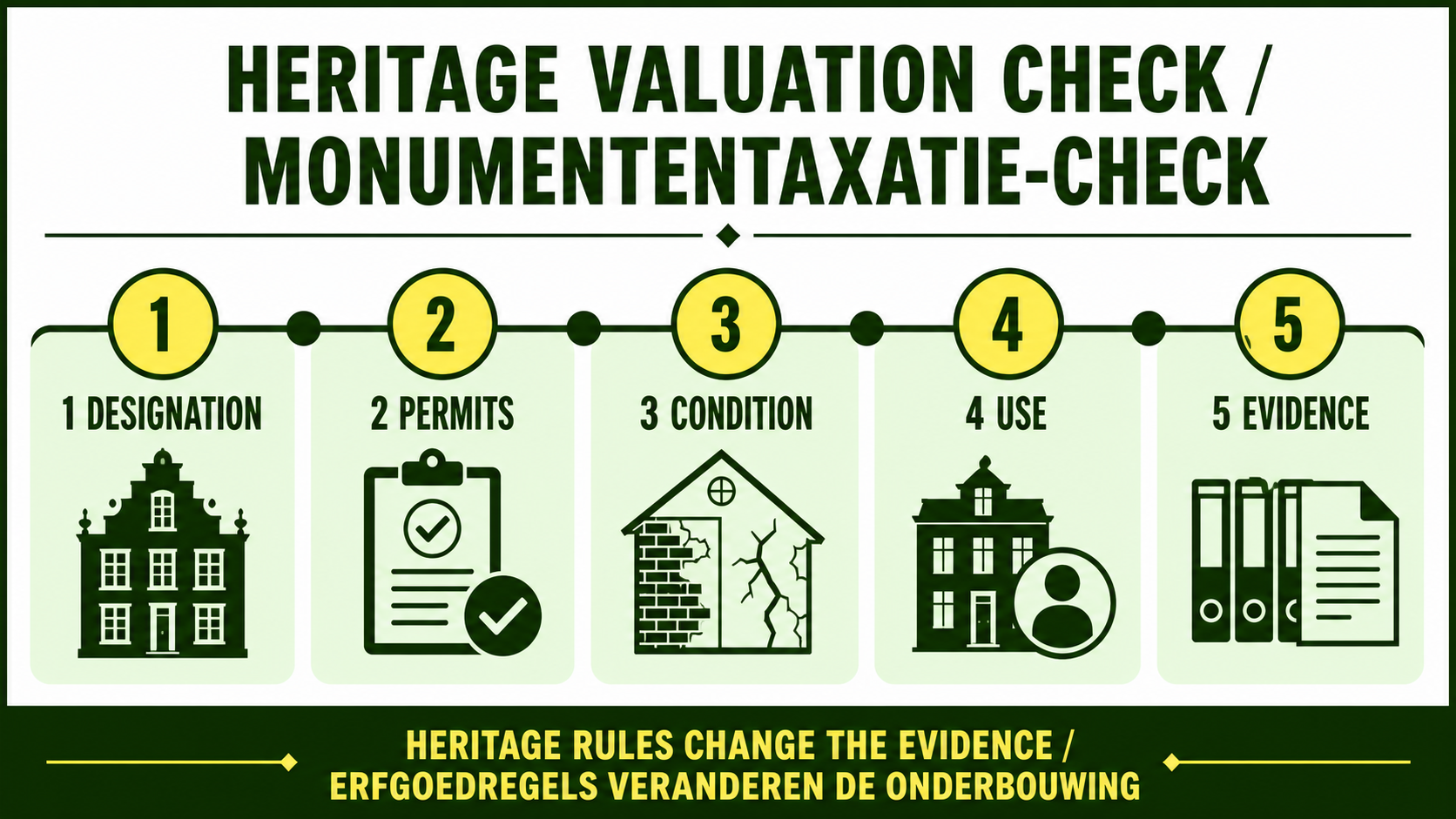
- The five-part heritage valuation check
- How to prepare the file
- Common mistakes and edge cases
- FAQ
TL;DR
For a listed building, put the designation, protected elements, permissions, condition and intended report use in the brief. The appraiser can then connect heritage evidence to the value question while the competent authority handles permits and heritage decisions.
Rijksoverheid says many changes to a protected monument need a permit, including demolition, extension, repointing a whole facade or replacing historic glass. It also distinguishes ordinary maintenance with the same colours, materials, details and profile. Treat that as a reason to check the actual property and municipality, not as a universal permit ruling.
With the situation clear, start by separating the property facts from the decision the report must support.
When you assess a listed building near Eindhoven, compare residential market evidence from Geldrop with heritage status, permissions and maintenance before you set the specialist brief.
What a listed-building appraiser does
An appraiser forms an opinion of value for a defined property interest, purpose and date. The work can include inspection, property and title information, planning or heritage research, comparable transactions, condition observations and an explanation of assumptions.
The appraiser does not replace the municipality, heritage officer, architect, building inspector or contractor. A report can identify that a permit, condition issue or restoration assumption matters without certifying the answer to that separate question.
Residential valuation fundamentals supply shared property evidence. A listed building with business, rural or mixed use adds questions from commercial property valuation or agricultural property valuation.
The next question is why this detail changes the valuation.
Why heritage status changes the evidence
Two buildings with similar size and location can have different value evidence if one has protected elements, restrictions or a different maintenance burden. A planned renovation may affect value only when it is permitted, technically feasible and economically credible. A decorative feature may add appeal while increasing care obligations.
Buyers still compare homes in a local market, and that market view remains useful. Heritage evidence can change the comparable set and the assumptions, so it deserves a place beside ordinary property facts rather than a blanket premium or discount. Ask which facts affect the defined value and how confidently the file supports them.
Rijksoverheid advises contacting the municipality for a protected town or village view and notes that a heritage or welfare committee may be involved. Keep the permission question with that official method. Your report should expose assumptions and limitations, and valuation report requirements define what the recipient needs to see.
These are the details worth checking before you compare providers or send the file.
The five-part heritage valuation check
1. Designation
Record the type of protection, reference or description available and which elements are covered. Do not infer the legal status from the building’s age or appearance.
2. Permits
List completed, pending and planned work. Attach permit decisions or municipality correspondence where available. Ask the municipality or a qualified adviser to confirm what is required.
3. Condition
Separate observed condition from a contractor’s estimate or a planned restoration. Include maintenance history, defects, specialist materials and uncertainty.
4. Use
Describe current and intended use: home, office, shop, hospitality, community, care or another use. Use and permitted use are different facts.
5. Evidence
Gather plans, title information, heritage records, permits, condition reports, invoices and relevant comparable transactions. Label missing or unverified items.
Now bring the property facts and the planned decision into one brief.
How to prepare the file
- Name the purpose and recipient. A purchase, loan, sale, division or insurance question can need different evidence.
- Confirm the designation. Use official records or municipality information rather than a visual assumption.
- Map permissions. Separate ordinary maintenance, completed alterations and planned work.
- Document condition. Add dated photographs, reports, invoices and known defects.
- Describe use and restrictions. Include actual use, planned use and any commercial or rural element.
- Review the report. Check value date, comparables, assumptions, method, condition limitations and uncertainty.
A heritage file starts with property valuation documents and adds designation, permission, maintenance and condition records. A heritage property’s scope can change the quote, so property valuation cost factors should be compared with the work included.
Before you book, check the mistakes that can create extra work or leave you with the wrong report.
Common mistakes and edge cases
- Treating an old or attractive building as officially protected without checking.
- Assuming every repair needs a permit or that no alteration needs one.
- Adding a future renovation premium without evidence of permission, cost or market response.
- Using ordinary residential comparables without testing condition and heritage obligations.
- Confusing a valuation with a structural survey, restoration budget or permit decision.
- Leaving the value date unclear while a project or market condition is changing.
Mixed-use heritage assets, a farm with listed buildings, a church conversion, an incomplete archive or a planned change of use can need additional experience. Record the uncertainty and ask the responsible authority or professional for its part of the answer.
Use these questions to test whether the proposed work fits your situation.
FAQ
Does a listed status always increase value?
No universal premium follows. Appeal, location, condition, restrictions, maintenance burden, use and buyer demand can point in different directions. Your report should explain the evidence.
Can an appraiser approve my renovation?
No. Permit and heritage decisions belong to the relevant authority and professionals. The appraiser can consider documented permissions and assumptions in the valuation.
Should restoration cost be deducted from value?
That depends on the assignment, evidence, condition, scope and market response. A contractor estimate is not automatically a value adjustment.
Can I compare a monument with a normal home?
Possibly as one reference, but not without checking designation, condition, use, location and relevant buyer market. The comparable must answer the same value question.
Can a lender use a listed-building report?
Ask the lender before commissioning it. The recipient may require a particular report, inspection, method, registration or date.
For a monumental property, collect the designation, known permits, maintenance history, condition evidence and actual use before comparing reports. A value opinion cannot confirm whether a planned alteration is allowed or affordable. Contact us if you want help turning the heritage facts into a focused valuation brief.
Ask about listed-building valuation →