Top 10 Points of Attention in Monument Valuation
A practical monument valuation checklist covering heritage status, permitted use, condition, restoration evidence, market data and report purpose.

A listed building needs a heritage-aware brief
If you own, buy, finance or inherit a listed building, prepare the designation, protected parts, permissions, condition and maintenance records before you request a valuation.
These facts need separate treatment because a valuation describes value for a stated question while an authority decides permissions.
Table of contents
- TL;DR
- What makes monument valuation different
- How these checks were selected
- Fast answer
- Full list
- Comparison cards
- How to choose
- Frequently asked questions
TL;DR
Start with the designation, protected elements, current use, permissions, condition and restoration history. These points help you see which heritage facts affect the property value and which decisions belong with the authority, architect or contractor.
- Confirm national, provincial, municipal or area protection.
- Record the protected elements and the whole property boundary.
- Separate current use from a planned alteration or new use.
- Gather condition, maintenance, restoration and permit evidence.
- State value basis, date and report recipient.
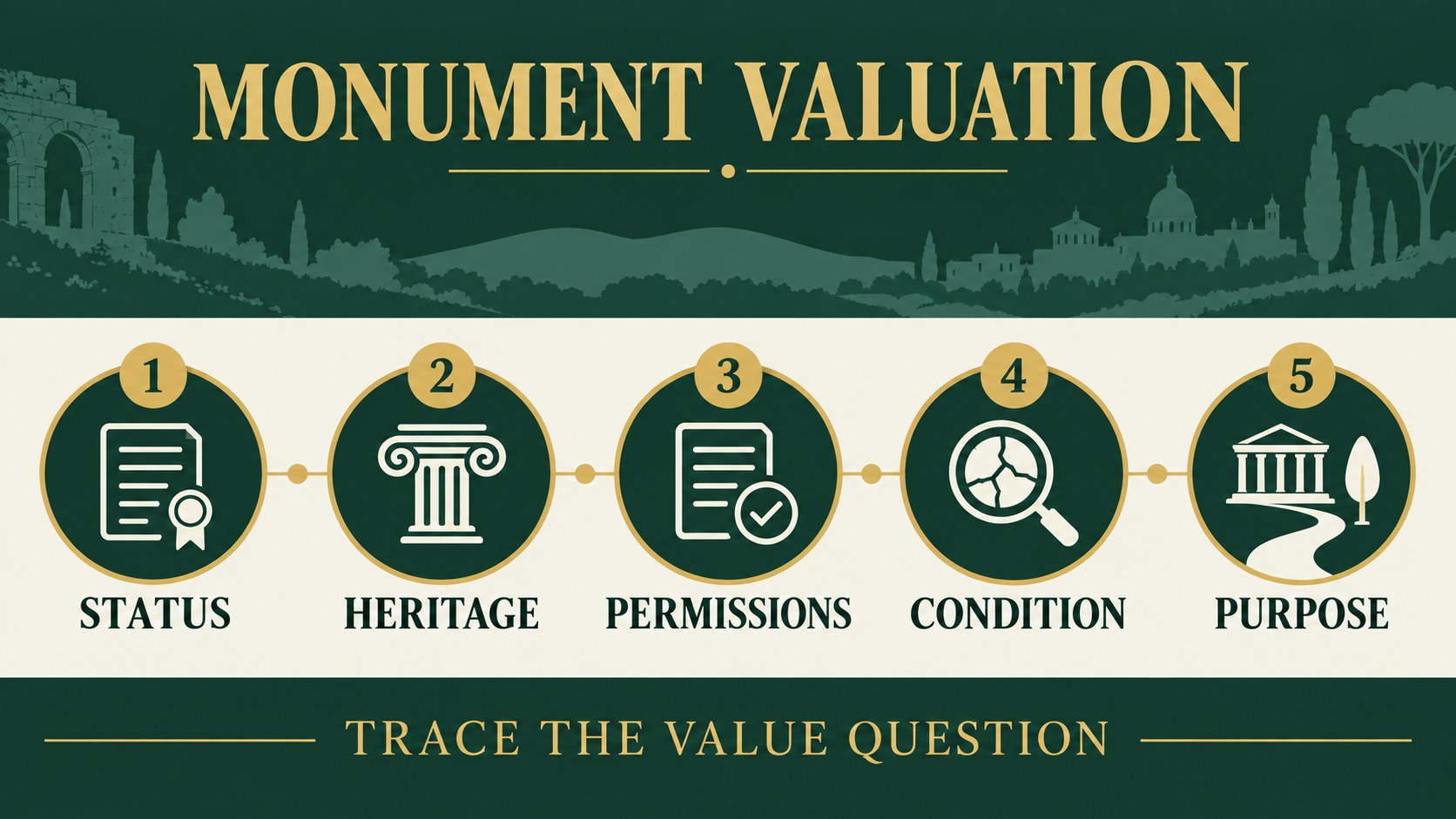
Once you name the decision, the rest of the valuation becomes easier to follow.
If you are assessing a listed building near Eindhoven, consider a property valuation in Leende as residential market evidence, then assess heritage status, permissions and maintenance separately.
What makes monument valuation different
Monument status can affect the building, its setting and sometimes the parcel around it. The register, designation decision, description of heritage values and later alteration records help define what the owner holds and what may change.
The monument valuation topics group property and purpose questions around heritage assignments.
The wider listed-building valuation topic keeps status, use and condition in one brief.
Condition tells another part of the story. Deferred maintenance, moisture, foundations, installations, roof work and specialist materials can affect buyer demand and future costs. An estimate for restoration describes work; it does not become market value by arithmetic.
Use and permission need their own lines. A home, office, shop, hotel or mixed-use monument may have a different market and a different permit path. Your report should state what is known at the value date and which future plan remains uncertain.
These are the details worth checking before you compare providers or send the file.
Valuation before or after renovation helps separate current condition from a planned change in the building.
How these checks were selected
The question it answers
Which ten points should an owner or adviser bring into a monument valuation in 2026? The answer covers status, heritage, use, permissions, condition, costs, market evidence, purpose and uncertainty. It does not decide a permit application.
What each item covers
Each point was tested against:
- legal and heritage status;
- protected values and property boundary;
- use, occupancy and planned changes;
- permission, maintenance and restoration evidence;
- market, value purpose, date and recipient.
Evidence behind the selection
The analysis draws on public Monumenten.nl and RCE information about maintenance, changes, obligations and permits, plus NRVT material on property value, report scope, methods and uncertainty. The list turns that material into a client-side evidence order.
The records needed for a listed-building valuation bring registers, permits, plans and condition records together.
When the checks need revisiting
Monument status, local procedures, use, condition and costs can change. A national monument and a municipal monument can follow different processes. Recheck the individual register, authority and report brief when the work or value date changes, and review these checks yearly.
That first comparison gives the rest of the discussion a clear shape.
Fast answer
Quick recommendation cards
- Start with status: the register, designation or protected area is unclear.
- Start with condition: repairs, moisture, structural work or restoration costs shape the discussion.
- Start with purpose: buyer, lender, insurer, tax adviser or board needs a different report question.
A protected status changes the evidence. It does not set one fixed premium or one fixed method for every property.
Valuation report requirements frame purpose, recipient, date and assumptions for the monument file.
Full list
1. Leaving the monument status vague
National, provincial, municipal and area protection can have different records and consequences. A listing description alone may omit the designation, date or protected elements.
Why it matters: the file needs the relevant register entry and designation information.
Ask yourself: Which status applies at the value date, and which document supports it?
2. Looking only at the façade
Heritage value can include structure, interior, plan, materials, setting, outbuildings and the parcel. A façade photograph cannot describe the whole interest.
Why it matters: the inspection and records should identify protected parts and later changes.
Ask yourself: Which elements and boundaries form part of the heritage evidence?
3. Treating current use as the only use question
An occupied home, shop, office, hotel or mixed-use property can have a different market from an empty building. A planned change needs a separate assumption.
Why it matters: use, occupancy, leases and possible future use receive separate lines.
Ask yourself: Which use is documented now, and which use is only proposed?
4. Treating a valuation as permission
An appraiser can describe the effect of a known permit, restriction or assumption. The authority decides whether a proposed change may proceed.
Why it matters: the brief names the permit question and attaches available decisions or applications.
Ask yourself: Which permission is in place, which request is pending and who decides it?
5. Under-recording condition
Heritage materials, older foundations, roofs, installations and moisture can need specialist inspection. A clean room does not prove that the building has no hidden maintenance exposure.
Why it matters: inspection notes and specialist reports can shape assumptions and uncertainty.
Ask yourself: Which condition records and inspections are available for the value date?
6. Using a repair estimate as value
Restoration cost can show the scale of work or a possible burden. Buyers may price timing, disruption, financing and future use differently.
Why it matters: cost evidence is described beside, rather than substituted for, market evidence.
Ask yourself: Which costs are known, which are estimates and how do they affect the market question?
7. Ignoring alteration records
Windows, roofs, extensions, installations and interior changes may have permits, conditions or heritage advice attached. Missing records create uncertainty about the property as it stands.
Why it matters: drawings, decisions, invoices and completion records become part of the file.
Ask yourself: Which changes were made, when, and with which records?
8. Expecting many perfect comparables
Monuments differ in status, design, setting, use and condition. A small evidence set can still help when the reasons for adjustment are clear.
Why it matters: the report should explain selection, differences and uncertainty rather than hide the small sample.
Ask yourself: Which market evidence is closest, and where does it stop being comparable?
9. Mixing value purpose and date
Market value, insurance value, tax value and a value for lending can answer different questions. A renovation or permit event can make an old date unsuitable for the current brief.
Why it matters: value basis, interest, date and recipient appear in the first line of the instruction.
Ask yourself: Which decision will the report support and at which date?
10. Leaving assumptions and relationships hidden
A monument report can carry uncertainty around use, condition, permission and market evidence. The professional’s independence and any earlier role belong in the assignment record.
Why it matters: assumptions, missing records, relationships and limits become visible to the reader.
Ask yourself: Which facts could change the opinion, and how are they shown?
Comparison cards
- Status: designation, register, protected area and date. Your brief attaches the relevant record.
- Heritage: protected values, setting, parcel, interiors and later changes. Your brief defines the inspected interest.
- Permissions: current use, applications, decisions and conditions. Your brief separates facts from future plans.
- Condition: maintenance, defects, restoration, specialist reports and costs. Your brief states what was observed and what remains uncertain.
- Purpose: sale, finance, insurance, tax, division or reporting. Your brief names value basis, date and recipient.
Use the cards to spot the first gap in your file. A restoration budget cannot settle the market, and a heritage label cannot explain a report’s value purpose by itself.
How to choose
- Gather status records. Save register entries, designation documents, protected-value descriptions and parcel information.
- Describe use and changes. List current occupancy, leases, alterations, permits and planned work.
- Assemble condition evidence. Add inspection notes, maintenance history, specialist reports and estimates.
- Write the value question. Name interest, purpose, date and recipient.
- Compare scopes. Ask each candidate for the same inspection, records, market work, assumptions, timing and fee.
Frequently asked questions
Does every monument need the same valuation approach?
No. Status, use, size, condition, location, market and purpose change the evidence. Ask the candidate to describe the method and limits for the individual property.
Does monument status always increase value?
Status can support character and demand while adding restrictions and maintenance work. The effect depends on the property, use, condition and buyer group.
Does a permit application form part of value?
It can be relevant when the report states the application, stage and assumptions. A pending request remains uncertain until the competent authority decides it.
Are restoration costs added to market value?
They can inform condition and buyer decisions. Cost evidence is one part of the file and does not automatically equal an addition to value.
Can a normal residential appraiser value a monument?
Some can, when their experience and scope fit the property. Ask about heritage records, condition evidence, permissions, comparable sales and report recipient before instruction.
When does a second opinion help?
A second opinion can help when status, protected elements, condition, market evidence or assumptions are unclear. Give the second professional the same records and state the point under review.
Collect the monument register entry, protected-value information, use, permits, alteration history, condition notes, restoration plans, cost estimates, value purpose and report recipient before requesting a monument valuation. Ask which heritage or building questions need another adviser. Contact us when the monument evidence needs to become a clear valuation brief. Do not send passports, contracts, bank details or other personal documents through the public form.
Ask about monument valuation →