Valuation Before or After Renovation: Which One Do You Need?
Learn how current value, planned work and lender requirements affect a renovation valuation.

When this valuation matters
A renovation creates two moments worth keeping apart: the home as it stands today and the home you hope to finish. Homeowners, buyers, lenders and advisers can match the work, evidence and report date to a construction loan or another decision.
Table of contents
- TL;DR
- What the two valuation moments mean
- Why timing changes the evidence
- Current value, post-work value and cost
- A renovation valuation sequence
- Common mistakes and edge cases
- FAQ
TL;DR
Choose the current value when the decision concerns the home today and the post-renovation value when the finished scenario must be assessed. Plans, permissions, budget, condition and market evidence need to support that scenario; the budget alone cannot set the new value.
Some files need both values. The brief should say whether the report must show current value, value after work or the effect of a defined improvement. Plans, costs, permits, timing and market evidence support the answer.
When you are planning renovation work, compare the existing property facts with property valuation in Eindhoven before you add planned works to the assessment.
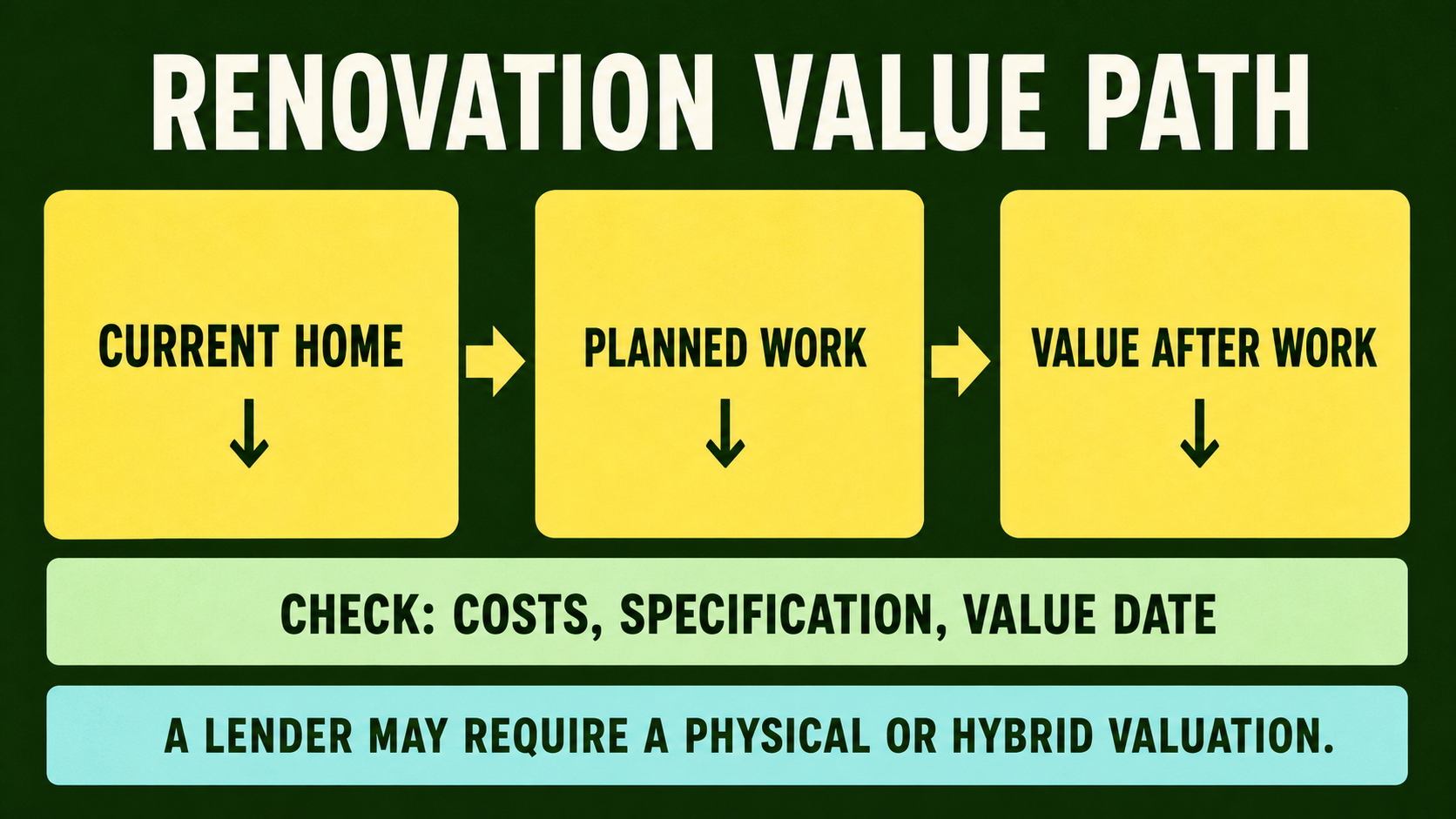
Once you name the decision, the rest of the valuation becomes easier to follow.
What the two valuation moments mean
Before the renovation
The appraiser records the property as it exists on the agreed value date. The assignment can also describe planned work, costs, permission, timing and an assumed finished state. That assumed state needs enough evidence to make the question understandable.
After the renovation
The appraiser reviews the finished or partly finished condition on a new agreed date. Invoices, approvals, plans, photographs and inspection records help show what changed. The market may respond differently from the amount spent.
Before and after together
A lender may need a current value for security and a value after work for a planned loan. Ask how the report should label each value, assumption and date. A single headline number can hide which state it describes.
The next question is why this detail changes the valuation.
Why timing changes the evidence
Before work, the file contains intention and risk. The scope may change, permission may be pending and the budget may be an estimate. After work, the file contains observed condition and completed costs, while defects, missing work or changed plans can remain.
Whether a permit or notification is needed depends on the Omgevingsloket permit check. A valuation can record a permit or assumption but cannot decide whether a project may proceed.
Current value, post-work value and cost
Renovation cost and value change are related facts with different meanings. A €60,000 kitchen, extension or repair budget does not automatically add €60,000 to market value. Buyers compare the finished property with alternatives, and some work mainly prevents a discount or returns the home to ordinary condition.
For an NHG mortgage change, NHG describes a hybrid option for named quality-improvement cases. Its published explanation says the renovation is not included in the hybrid valuation and the pre-work market value leads. It also gives a 90% limit in named situations. The lender’s current conditions and the complete NHG rules apply to the file.
A renovation valuation sequence
- Name the decision. Say whether the question concerns a renovation loan, refinancing, sale, insurance or a completed project.
- Fix the value date. Ask which date applies before work and whether a second date will be needed after completion.
- Describe the work. Supply plans, measurements, specifications, budget, contractor quote, permits and energy details where relevant.
- Ask the lender about method. Confirm physical or hybrid valuation, current or post-work value, report format and loan conditions.
- Keep a change record. Mark substitutions, delays, deleted items, extra work and completed invoices.
- Review the delivered report. Check property identity, state, assumptions, value dates, cost treatment, limits and recipient.
Renovation and construction-loan valuation defines the wider borrowing question. A mortgage change adds refinancing valuation requirements, an NHG loan adds NHG valuation requirements and energy work adds energy-label valuation factors to the brief.
Before you book, check the mistakes that can create extra work or leave you with the wrong report.
Common mistakes and edge cases
- Ordering a post-work value while the plans are still only an idea.
- Asking for an after-work value when the lender only needs current security value.
- Treating the renovation budget as a guaranteed value increase.
- Ignoring a permit, leasehold rule, apartment association decision or planning restriction.
- Using a hybrid method without checking its loan, property and improvement conditions.
- Failing to record a changed specification or unfinished item.
- Assuming a newly built property follows the same valuation method as an existing home.
An extension can change floor area, access, light and layout. Energy work can affect running costs and evidence. A structural repair can remove a defect without adding a premium. Your report should explain which facts support the value opinion.
If cost, timing or acceptance still concern you, ask the provider to state each condition before the appointment.
FAQ
Should I order the valuation before or after the renovation?
Ask the recipient. Financing calls for current value and a documented planned scope, while a completed-project review calls for observed condition and delivery evidence. Some files need both.
Does the cost of work equal the added value?
No fixed relationship applies. Market response depends on location, quality, layout, demand, condition and the alternatives buyers can choose.
Can a hybrid valuation include the finished renovation?
In named NHG quality-improvement cases, NHG says the hybrid value uses the pre-work market value. A lender can apply its own current conditions, so confirm the file before ordering.
What documents should I send?
Start with plans, measurements, specifications, quotes, permits, apartment decisions, invoices, photographs and a timeline. Label estimates, approved work and completed work separately.
Can the appraiser tell me whether I need a permit?
Permit decisions belong to the municipality and the Omgevingsloket process. Give the appraiser any available decision or check result so the valuation assumptions are clear.
What if the renovation changes after the inspection?
Record the change and ask the lender and appraiser whether the report scope still fits. A new inspection or updated value may be needed.
Ask the lender whether the file needs current value, value after work or both, and keep the plans, budget, permits and timing together. A report cannot turn renovation cost into a guaranteed value increase. Contact us if you want to prepare the valuation brief before the contractor starts.
Ask about a renovation valuation →