Top 7 Pitfalls in Hospitality Property Valuation
Seven common valuation pitfalls for hotels, restaurants and leisure properties, from operating income and seasonality to permissions, leases and condition.

Keep the property and operation distinct
If you own, buy, finance or advise on a hotel, restaurant or leisure property, separate the building, operation, leases and permissions before you rely on a valuation.
Trading results explain the operation, while the property needs its own evidence and value question.
Table of contents
- TL;DR
- What hospitality property value includes
- How these checks were selected
- Fast answer
- Full list
- Comparison cards
- How to choose
- Frequently asked questions
TL;DR
Keep the property, the operation and the assumptions in separate lines. Then check the trading period, occupancy, leases, permitted use, maintenance and value date so a strong business result does not hide a weak property file.
- Define land, buildings, fixtures and the property interest.
- Normalise trading records and separate business assets.
- Confirm permitted use and operating permissions.
- Read leases, management, franchise and service terms.
- Match condition, planned work, value purpose and date.
Keep that purpose in view as the details come in; each one matters because it changes what the appraiser needs to test.
If you are assessing a hotel or restaurant near Eindhoven, compare commercial-property valuation evidence with the lease, trading records and business use before treating those inputs as interchangeable.
What hospitality property value includes
A hospitality property may earn income through rooms, food, drinks, events, parking, wellness or other services. The valuation needs a stated boundary around the land, buildings, fixed installations and rights being assessed.
The hospitality valuation topics group property and purpose questions around hospitality assignments.
The wider commercial property valuation context connects income, leases, use and building evidence.
The operating business can bring staff, stock, brand, booking systems, contracts and equipment. Some items sit with the property and some sit with the business. Accounts can inform an income method while the report keeps those groups visible.
Lease and permit evidence can shape demand. A long lease may support income and restrict changes. A permit can support current use while a future extension still needs approval. Condition and planned capital work add another set of assumptions.
These are the details worth checking before you compare providers or send the file.
The question of a specialist for commercial property valuation belongs beside the trading and property brief.
How these checks were selected
The question it answers
Which seven pitfalls can distort hospitality property valuation in 2026? The list tests real estate, trading, use, leases, condition and purpose. It does not decide operating permission or value a business outside the agreed scope.
What each item covers
Each pitfall was tested against:
- property interest and fixed assets;
- trading periods, costs and seasonality;
- permitted use and operating rules;
- lease, management and franchise rights;
- condition, planned work, value basis and date.
Evidence behind the selection
The analysis uses NRVT commercial valuation and conduct material plus current CBS hospitality and accommodation data. The CBS sector result is included as context with a clear boundary around one property.
The records needed for a hospitality property valuation gather leases, permits, accounts and condition records.
When the checks need revisiting
Turnover, occupancy, costs, leases, permits and condition can change quickly. Recheck accounts and contracts at the value date, and recheck these points yearly or when the recipient changes the report requirements.
That first comparison gives the rest of the discussion a clear shape.
Fast answer
Quick recommendation cards
- Start with property scope: land, building, fixtures and business assets are mixed together.
- Start with trading records: the conclusion relies on gross turnover, one season or an unadjusted forecast.
- Start with rights and condition: leases, permits, planned works or maintenance exposure are unclear.
The first weak layer deserves attention. A busy restaurant can occupy a tired building, and a good lease can carry conditions that change future use.
Valuation report requirements frame purpose, recipient, date and assumptions for a hospitality property.
Full list
1. Treating trading results as property value
Turnover and profit describe the operation. The property value depends on land, buildings, rights, use, condition, income evidence and the stated method.
Why it matters: the report separates real estate, business assets and operating assumptions.
Ask yourself: Which income belongs to the property and which income belongs to the trading business?
2. Using gross turnover without normalisation
Gross receipts can include VAT, commissions, delivery income, events, owner services and unusual periods. Costs for staff, energy, maintenance, management and replacement work can change the sustainable result.
Why it matters: the operating record becomes a consistent input rather than an attractive headline.
Ask yourself: Which period, costs, one-off items and owner benefits were adjusted?
3. Relying on one season or one business mix
Hotels, restaurants and leisure properties can have large shifts by month, weekday, event, room type or service. A sector figure or a single busy summer may hide the full pattern.
Why it matters: the file needs several periods, occupancy or covers, revenue mix and a reason for unusual months.
Ask yourself: Which pattern is normal for this property and which result was exceptional?
4. Leaving permits and permitted use vague
Current restaurant, hotel, terrace, event, parking or leisure use can depend on the plan and permits. A planned extension or new service can remain a future question.
Why it matters: the report states current use, permission records and future assumptions separately.
Ask yourself: Which use is documented today and which change still needs approval?
5. Skipping lease, management and franchise terms
Rent, indexation, break rights, repair duties, management fees, franchise rules and service contracts can shape the income and buyer group. A summary sheet may leave out a condition that controls the property.
Why it matters: signed agreements and recurring charges become part of the scope.
Ask yourself: Which terms affect income, control, repairs, renewal or transfer?
6. Under-recording condition and replacement work
Roof, kitchen, rooms, installations, fire safety, energy systems and guest areas can need work at different times. A trading result can look healthy while the building carries deferred expenditure.
Why it matters: inspection, maintenance history, invoices and planned capital work appear beside the accounts.
Ask yourself: Which works are due, priced or already included in the operating records?
7. Leaving purpose, date and assumptions open
A sale, lender, reporting, tax or division question can need a different value basis and date. The report may carry uncertainty around trading, use, leases and condition.
Why it matters: interest, purpose, recipient, assumptions and missing records are fixed before the method is applied.
Ask yourself: Which decision must the report answer and what facts could change the opinion?
Comparison cards
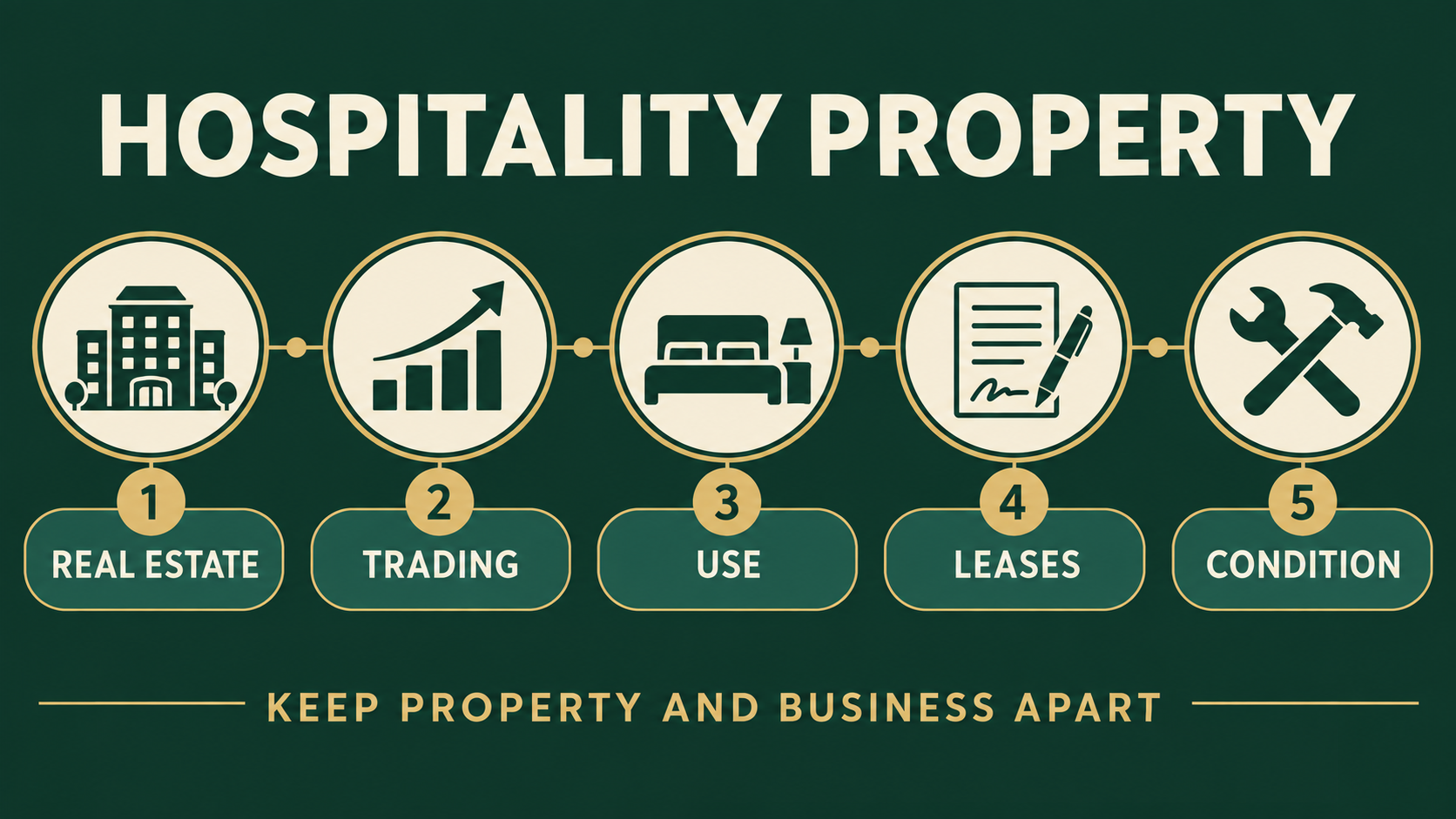
- Real estate: land, buildings, fixed installations and property rights. Your brief draws the boundary.
- Trading: rooms, covers, occupancy, costs and business assets. Your brief separates recurring property income from the operator.
- Use: plan, permits, current activity and future plans. Your brief dates each assumption.
- Leases: rent, term, indexation, repairs, management, franchise and service rights. Your brief attaches signed terms.
- Condition: inspection, defects, energy, safety, maintenance and planned work. Your brief shows future cost exposure.
The cards show why a strong trading result can sit beside a weak property case. The value question needs all five layers and a named purpose.
How to choose
- Draw the property boundary. List land, buildings, fixed installations, furniture, equipment and business assets.
- Prepare trading records. Gather several periods, occupancy, revenue mix, costs, one-off items and forecasts.
- Gather rights. Add plan information, permits, leases, management, franchise and service agreements.
- Record condition. Include inspection, maintenance, safety, energy, invoices and planned work.
- Write the report question. Name interest, purpose, date, recipient, method questions, timing and fee.
Frequently asked questions
Does turnover determine hotel or restaurant property value?
Turnover can inform an income method. The conclusion still depends on property scope, costs, leases, use, condition, market evidence and the stated purpose.
How many years of accounts are needed?
The useful period depends on the property, seasonality and the question. Several periods can reveal ordinary and unusual results; the appraiser should state which records are needed.
Do permits affect the value?
They can affect current use, buyer demand and future plans. The report can record the permit position while the competent authority decides new or changed use.
Can a lease raise and lower value at once?
Yes. A lease can support income and restrict rent, control, repairs, renewal or transfer. The signed terms decide what the market sees.
Are furniture and equipment included?
Your assignment should state which fixtures, equipment and movable contents are part of the interest. Business assets can need a separate treatment.
When does a second opinion help?
A second view can help when gross turnover, one season, unclear leases, missing permits or deferred work shape the result. Give the second appraiser the same accounts and contracts and name the point under review.
Prepare the property boundary, accounts, occupancy, lease or management terms, permits, use, fixtures, condition, planned work, value purpose and report recipient before requesting a hospitality property valuation. Ask which operating figures belong in the property analysis and which business questions need another adviser. Contact us when a hotel, restaurant or leisure property needs a clear valuation brief. Do not send passports, contracts, bank details or other personal documents through the public form.
Ask about hospitality property valuation →