Valuation Requirements for Mortgage Refinancing: Bank Checks
Learn how to confirm a lender's report, method, value date and acceptance requirements before refinancing a mortgage.

When this valuation matters
If you are refinancing, match the valuation to the lender’s question and the home’s current appearance before reusing or ordering a report. Homeowners, advisers and lenders can check value date, loan-to-value, method, planned work and report acceptance before reusing or ordering a report.
Table of contents
- TL;DR
- What bank valuation requirements cover
- Why lenders ask different questions
- Checks to make before ordering
- A pre-order sequence
- Common mistakes and edge cases
- FAQ
TL;DR
Ask the lender which report, date and method it accepts for the new loan. Then give the appraiser the current debt, property changes, extra borrowing and planned work so the report answers the refinancing decision in front of you.
Lenders publish different options. Rabobank says a Calcasa Desktop Taxatie can be possible in many refinancing cases and also lists situations where a report made on location is needed. ABN AMRO lists report age, client instruction, NWWI approval and appraiser independence for named cases. Treat those statements as bank-specific conditions.
Before you order a report, write down the lender’s questions and compare them with mortgage valuation requirements.
That gives you a useful starting point. The next question is how the assignment works for the person who will rely on it.
What bank valuation requirements cover
A valuation requirement tells you what property evidence the lender wants before it assesses the mortgage. It can include the report format, inspection, appraiser status, approval body, value date, delivery channel and permitted assumptions. The requirement may also say whether the output is for a pure refinance, an increase, a renovation loan or an energy budget.
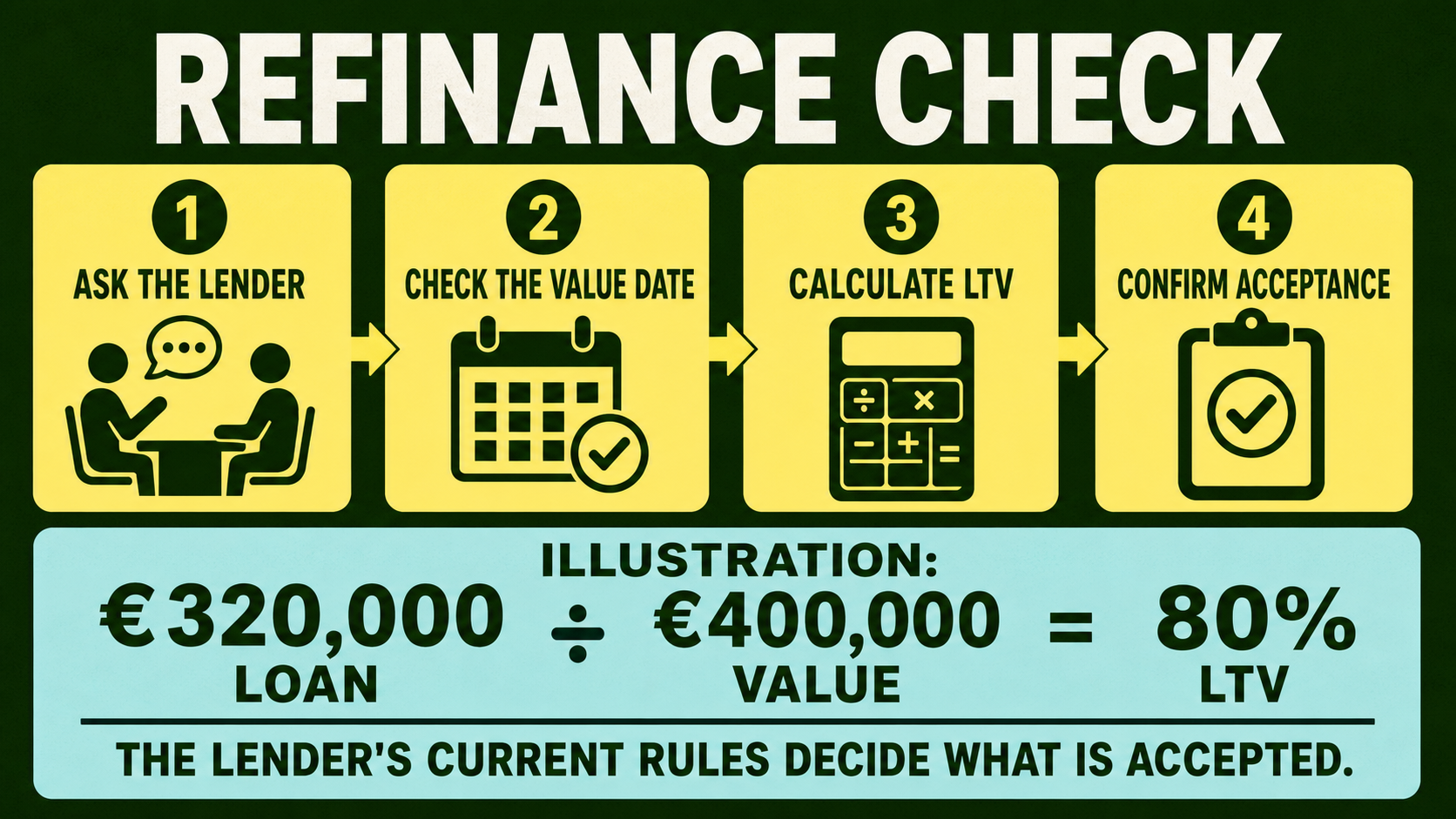
Loan-to-value compares a relevant loan amount with the reported property value. An illustration using €320,000 of debt and a €400,000 value gives 80% LTV. The lender decides which amount and value it uses, and it also considers income, debts, affordability and product rules.
Now the practical consequence becomes clear: the evidence has to answer the question behind the assignment.
Why lenders ask different questions
The same property can support several mortgage decisions. Replacing an existing loan can have another evidence need than adding borrowing or funding work. A lender may accept a desktop method for one type of change and request a physical report for another. A property with unusual maintenance, heritage, leasehold or mixed use can also fall outside a model’s scope.
The report recipient matters. A report prepared for one lender or purpose may not transfer to another file. Ask who receives it, where it is submitted and how long the lender treats the report as current.
These are the details worth checking before you compare providers or send the file.
Checks to make before ordering
Report type and inspection
Ask whether the lender wants a physical valuation, hybrid valuation, desktop output or an alternative document. Confirm what the inspection includes and whether a building report, plans or permits are needed.
Appraiser and approval
Write down registration, independence, NWWI approval or another named review requirement. A provider can tell you what it offers; the lender decides what it accepts for the file.
Value date and age
The value date belongs to the opinion of value. It may differ from the inspection date, report delivery date or loan offer date. Ask how the lender counts age and whether a report ordered earlier can still be used.
Loan amount and LTV
Ask which debt belongs in the calculation: the remaining loan, proposed loan, added budget or another amount. Keep an illustration separate from the lender’s full affordability assessment.
Work and unusual property facts
Mention renovation, energy measures, leasehold, an apartment association, mixed use, defects or a special location before ordering. Give the appraiser the plans and budget when the lender asks for current or post-work value.
A pre-order sequence
- Ask for the instruction. Save the lender’s current wording, document list and submission channel.
- Name the loan change. Separate pure refinancing, extra borrowing, renovation, energy work and a change of lender.
- List property conditions. Note leasehold, apartment rules, permits, unusual construction, mixed use, defects and planned work.
- Check the value date. Ask how old the report may be and which date the lender uses.
- Compare matching quotes. Compare inspection, report, approval, delivery time and exclusions when the scope is the same.
- Review before sending. Check address, purpose, recipient, date, assumptions, loan amount, method and approval status.
Refinancing valuation frames the broader mortgage decision. An NHG loan brings its own NHG valuation requirements, report validity and age matter when an older file is reused and property valuation documents identify the property evidence.
Small shortcuts can change the report even when the property itself has not changed. Keep these traps in view.
Common mistakes and edge cases
- Assuming every bank accepts the same method or report age.
- Ordering a desktop valuation before checking the property’s use, condition and LTV limit.
- Leaving an increase, renovation budget or energy measure out of the first request.
- Treating a recent WOZ document or old purchase report as automatically accepted.
- Comparing a low fee with a full report fee when inspection and approval differ.
- Asking for a value after work without plans, permits, budget or a clear timing assumption.
- Treating a higher value as a promise of more borrowing or a lower rate.
An apartment, leasehold property, monument, mixed-use home or unusual building may need another report path. Ask the lender to confirm the exception in writing.
Before the appointment, settle the practical questions that affect the report.
FAQ
Is a valuation always required for refinancing?
No single answer covers every lender and loan change. The bank may accept a different document or method in one case and require a full report in another. Ask before ordering.
Can I choose any appraiser?
You can compare providers, while the lender can set conditions for registration, independence, method, approval and delivery. Use the provider only after those conditions are clear.
Does 80% LTV mean the bank will approve the loan?
No. It means the chosen loan amount is 80% of the chosen property value in that illustration. Income, existing debt, affordability, product rules and lender policy still apply.
Can I use the report from when I bought the home?
Ask the lender. Purpose, recipient, value date and report age can make an old purchase report unsuitable for refinancing.
What if I am also funding a renovation?
Tell the lender at the start. The assignment may need a current value, a value after work or both. A hybrid method can have limits for planned improvements under named NHG conditions.
What should I do if the lender changes its requirements?
Ask for the new written instruction and compare it with the ordered scope. Let the lender and provider agree how missing evidence or a new report should be handled.
Before you order a report, ask the lender which method, inspection, value date, report recipient and loan amount it will use. Include any planned renovation or energy budget in that conversation. Contact us if you want help turning the lender's answer into a clear valuation brief.
Ask about a refinancing valuation →