How to Choose an Appraiser for Divorce: Check Independence First
A practical checklist for choosing an independent appraiser when a home or property must be valued for divorce.

When this valuation matters
If you are separating, use a property report that gives both parties the same factual starting point. Separating partners, lawyers, mediators and advisers need to choose an independent appraiser for a buyout, sale or settlement conversation.
Table of contents
- TL;DR
- What an independent divorce valuation covers
- Why independence and scope matter
- Checks before choosing an appraiser
- A shared selection process
- Common mistakes and edge cases
- FAQ
TL;DR
Choose the appraiser together when possible, and agree the purpose, date, access and report recipient before the visit. The professional values the property; lawyers and advisers handle rights, debt, tax and the settlement itself.
The report gives a value opinion for a defined date and assignment. It does not decide ownership, maintenance, support, tax or the legal settlement. Those questions belong with the parties and their legal or financial advisors.
If you are dividing property after separation, tie the ownership and report-purpose questions to valuation evidence for a divorce settlement, rather than treating the market value as the settlement itself.
If you are dividing property after separation, compare the home’s local market evidence with property valuation in the Eindhoven area while keeping the ownership, value date and settlement questions in the brief.
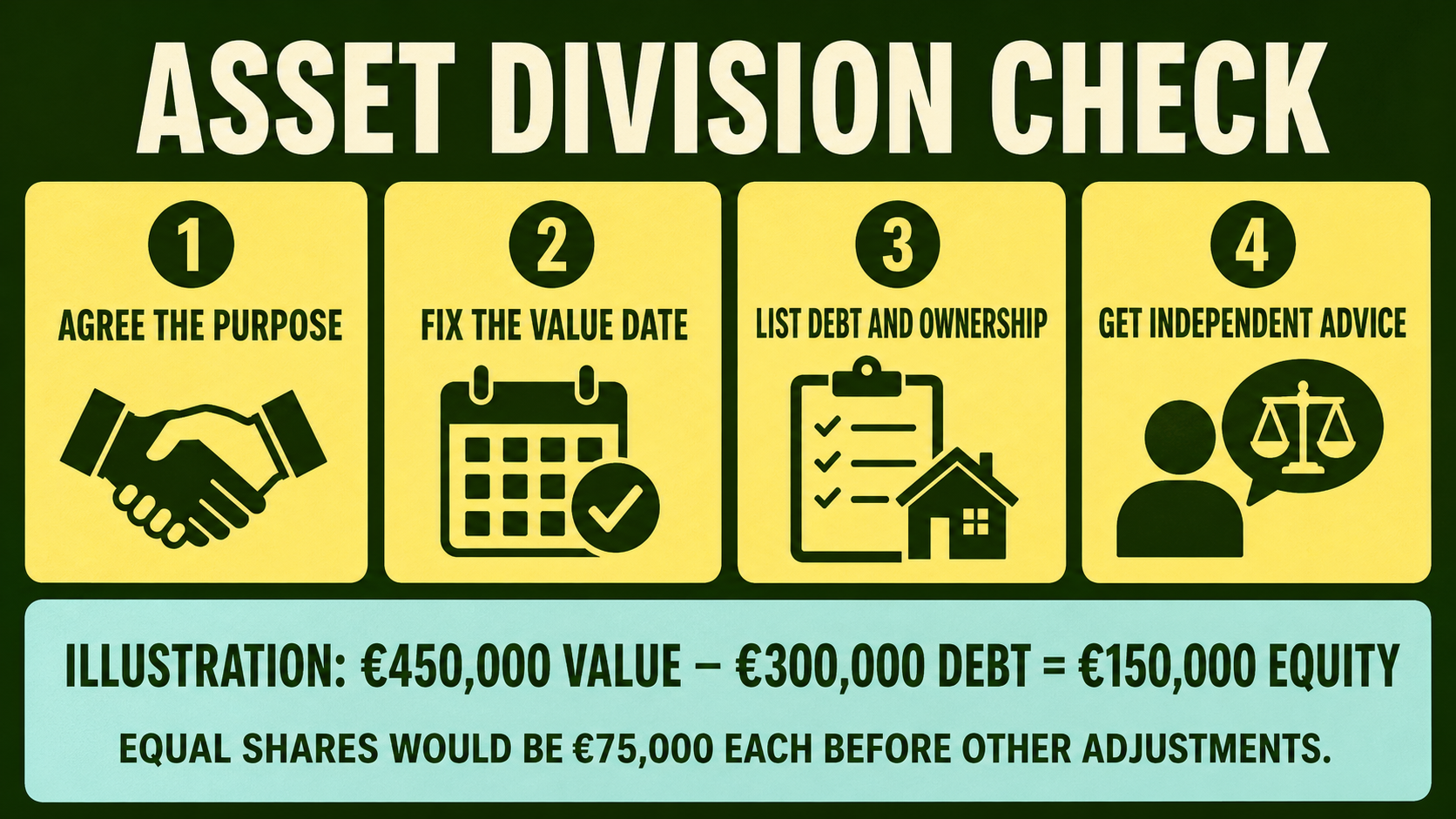
Keep that purpose in view as the details come in; each one matters because it changes what the appraiser needs to test.
What an independent divorce valuation covers
The assignment can concern a home, investment property, business premises, land or a mixed-use asset. State whether the question is sale value, a buyout, division at a past date, current market value or another purpose. List the ownership shares, mortgage, leases, fixtures and rights that belong to the property question.
An independent appraiser can inspect the property, review evidence, select a method and explain the value opinion. The appraiser does not act as a mediator and does not allocate the final settlement between the parties.
The next question is why this detail changes the valuation.
Why independence and scope matter
Both people need to trust the starting point. A prior sale instruction, an ongoing advisory role, a relationship with one party or a financial interest can create a conflict that must be discussed before the assignment.
The value date can change the result. A separation date, a move-out date, a sale date and the date of a mortgage request answer different questions. Put the date in the instruction and ask how evidence from that time will be collected.
Access should be balanced. Give both parties the same report, attachments and opportunity to submit property facts. A balanced provider screen includes appraiser independence and conflicts before either party relies on the result.
With the purpose settled, you can work through the checks in an order that mirrors the decision.
Checks before choosing an appraiser
Registration and role
Ask which register or professional standard applies to the property and purpose. A residential home, commercial building and rural asset can call for different experience.
Independence and prior involvement
Ask whether the provider, firm or appraiser has advised either party, broker, buyer, seller or lender in a way that relates to the property. Record the answer and any proposed safeguard.
Purpose and value date
State the event, value basis and date. Do not leave the provider to infer whether the report is for a buyout, sale, tax discussion or mortgage file.
Access and evidence
Agree who opens the property, sends documents and receives questions. Include title information, mortgage statement, lease, plans, permits, defects, improvements and relevant dates.
Report and fee
Ask what the fee includes, when the report arrives, who can use it, whether an approval step applies and which extra work costs more. Compare like with like.
A shared selection process
- Write the decision. Describe what the value will support and who will rely on it.
- List the property interest. Record address, ownership, mortgage, leases, fixtures, rights and any business element.
- Fix the date. Agree the value date and explain why it matters.
- Prepare equal access. Choose one document channel and give both parties the same factual opportunity.
- Screen candidates. Ask about registration, property type, independence, prior involvement and report scope.
- Compare written offers. Check inspection, method, report, approval, delivery, fee and exclusions.
- Confirm the instruction. Both parties should know the recipient, use, date and process before the visit.
The broader assignment is divorce property valuation. When value concepts are mixed, market value and WOZ value keeps them separate, while property valuation documents support the evidence file.
Small shortcuts can change the report even when the property itself has not changed. Keep these traps in view.
Common mistakes and edge cases
- Letting one party choose the provider and define the assignment alone.
- Asking for a current value while the settlement needs a past value date.
- Comparing a short fee quote with a full inspection and report fee.
- Omitting a mortgage, lease, business use, improvement or ownership share.
- Treating an appraiser’s value as a legal division or tax conclusion.
- Sending different facts to the provider without a shared record.
- Ignoring prior involvement because the provider is available quickly.
A home with a business, an investment property, farmland, a company-owned asset or a property with an earlier transfer may need another scope discussion. Mention the edge case before the offer is accepted.
Before the appointment, settle the practical questions that affect the report.
FAQ
Should both partners instruct the appraiser?
That approach can show shared scope and access, while the legal and financial advisers confirm what the settlement needs. At minimum, both parties should agree the instruction and receive the same report.
What does independence mean here?
It means the appraiser can form a value opinion without a personal, financial or assignment conflict that compromises objectivity. Ask about prior involvement and record the answer.
Who pays for the valuation?
The parties can agree a split or another arrangement. Put the fee and any extra work in writing. A fee arrangement does not change the value date or the evidence standard.
What if we disagree about the value date?
Ask the mediator or lawyer which date the settlement requires. A provider cannot solve that legal question by choosing a date silently.
Can the lender use the divorce valuation?
Ask the lender before ordering. The lender may need another report, recipient, date, method or approval step.
What if one party refuses access?
Record the limitation and ask the legal advisor how to proceed. Your report should state the inspection and information limits rather than hide them.
Before anyone orders a valuation, agree who will instruct the appraiser, which property and rights are included, the value date, fee split and report recipient. Ask about prior involvement with either party or the property. Contact us if you want to prepare a shared brief for an independent valuation.
Ask about an independent divorce valuation →